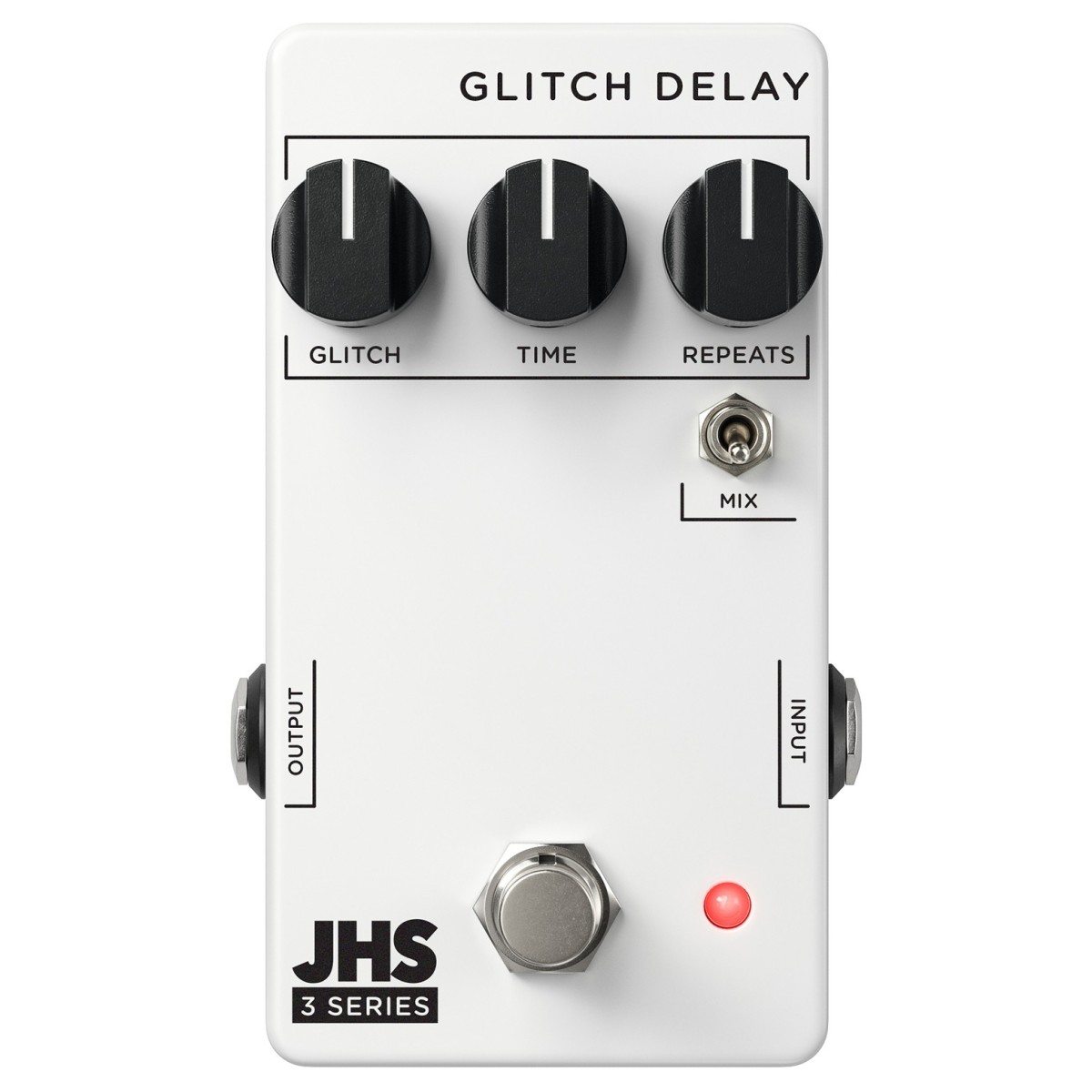
JHS 3 Series Oil Can Delay Pedal

View more in ,
Tags: ,
View more by

As an affiliate partner, we may earn a small commission when you buy through our links — at no extra cost to you.

£89.99

This is the JHS 3 Series Oil Can Delay Pedal from JHS Pedals, listed in Guitar Pedals on guitars pedals amps and stuff.. Read More below.

Description

The JHS Pedals 3 Series is a collection of pedals designed to give you affordability and simplicity without compromising quality. Dial in inspiring tone with the three simple controls and one toggle that offer a wide range of sounds, perfect for beginners and professionals alike. The JHS Pedals 3 Series will inspire your playing and help you explore new sounds at a totally approachable price point.

Controls

  • MIX – Controls the mix of echo and clean signal. Left is less, right is more.
  • SPEED – Controls the length of the delay time from 100ms to 330ms. Left is shorter, right is longer.
  • FEEDBACK – Controls the amount of feedback or repeats of the delay signal. Left is less, right is more.
  • +/- – The toggle allows you to switch between modulation intensities. In the down position, you have light movement, and in the up position, you have heavier movement. The modulation speed is associated with the delay time control (shorter is faster and longer is slower, reminiscent of the oil can warble in relation to the delay speed).

The Story Of The Oil Can Delay

After being discharged from the army in 1946, Ray and Marv Lubow formed Tel-Ray Electronics, specializing in Television and Radio repair. As the company grew, Ray also began dabbling in audio inventions – specifically, delay. Les Paul had already pioneered an effect called tape echo, but folks were trying to figure out how to make a smaller, more practical version of this oversized effect. Inspired to do just that, on June 30, 1959, Ray submitted the patent for an electro-static delay apparatus known today as the oil can delay.

These delay units contained oil in a tuna-can shaped drum that was moved by a belt mechanism that turned the drum while a special disk apparatus on which the audio signal “charge” was written and read through rubber wiper “heads.” The playback speed was directly related to the drum’s rotation speed. The oil acted as a protective layer to keep the audio signal “charge” electrons in place, creating a truly unique echo effect with elements of vibrato and slapback delay. Ray Lubow began licensing the oil can delay technology to amplifier companies, including Fender, Gibson, and Rickenbacker. In the late 1960s, Ray and Marv decided they wanted to start selling their devices under their own brand name and launched the now legendary effects company, Morley. Ray chose the name as a none-to-subtle jab at their competitor Leslie: “Why settle for less with a Leslie when you can get more with Morley?” Morley manufactured oil can delays up until 1989

Specifications

  • INPUT – 1/4” jack on the right side of the pedal.
  • OUTPUT – 1/4” jack on the left side of the pedal.

About the manufacturer

JHS Pedals

JHS Pedals are known for making standout effects pedals and more. Founded with a passion for tone and innovation, their gear has shaped countless records and players’ sounds. Look out for their iconic designs and flagship models — they’ve earned a reputation for reliability and creativity.

More info about this Product

Delay Pedals

Guitar Pedals

Guitar pedals are compact effects units that shape and enhance a guitar’s sound, sitting between the instrument and the amplifier. They include gain pedals like overdrive and distortion, modulation effects such as chorus and tremolo, time-based effects like delay and reverb, and essential utilities including tuners, compressors and loopers. Understanding basic things such as pedal type, signal order, power requirements and intended use helps players choose pedals that suit their style, setup and playing environment.

More Gear like this

Delay

Delay is an effect that records the guitar signal and plays it back after a short period of time, creating an echo or repeat. By adjusting the time, feedback, and level, delay can add subtle depth and space or produce rhythmic, expressive repeats that enhance lead lines, ambient textures, and overall atmosphere.

Guitar Pedal